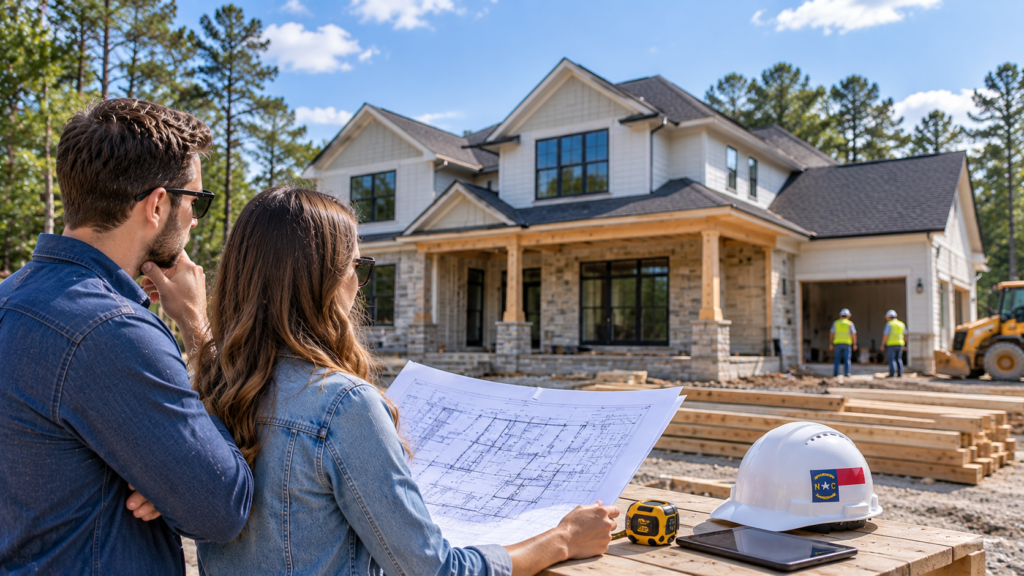
Building a new house in North Carolina in 2026 requires careful budgeting, proper planning, and an understanding of local construction costs. Whether you are planning a custom home in Charlotte, a family house in Raleigh, or a residential property in Wilmington, knowing the estimated construction expenses can help you make better financial decisions.
In 2026, building a standard home in North Carolina can cost approximately $135 to $200+ per square foot, while custom homes may range from $250 to $450+ per square foot. The final price depends on home size, materials, labor, design complexity, location, and site conditions. These figures are planning estimates, not guaranteed contractor quotes.
1. Average Cost to Build a House in North Carolina in 2026
The cost of building a house varies depending on the construction type and quality of materials. Basic homes generally require smaller budgets, while custom properties with premium finishes and complex architectural designs cost significantly more.
Here is an estimated construction cost breakdown:
| Home Size | Basic Construction | Custom Construction |
| 1,000 sq. ft. | 135,000–200,000 | 250,000–450,000 |
| 1,500 sq. ft. | 202,500–300,000 | 375,000–675,000 |
| 2,000 sq. ft. | 270,000–400,000 | 500,000–900,000 |
| 2,500 sq. ft. | 337,500–500,000 | 625,000–1,125,000 |
These are illustrative construction-only calculations based on the stated per-square-foot ranges. Land purchases, site preparation, and additional project expenses may increase the total budget.
2. Major Factors That Affect Home Construction Costs
Several factors determine how much you will spend building a house in North Carolina.
Home Size and Design: Larger houses require more materials, labor, and construction time. Complex floor plans, multiple stories, and custom architectural features can increase expenses.
Material Selection: Concrete, lumber, roofing, drywall, insulation, flooring, and fixtures influence the overall budget. Premium materials generally increase purchasing and installation costs.
Labor Expenses: Skilled workers, electricians, plumbers, roofers, and HVAC technicians contribute to construction expenses. Labor rates also vary across North Carolina.
Location and Site Conditions: Construction in Charlotte and Raleigh may have different labor and supplier costs than rural communities. Coastal and mountain properties can also require additional site preparation.
3. How Much Does Location Affect Construction Costs in North Carolina?
Your building location can make a significant difference in your construction budget.
- Charlotte: High demand for residential construction can influence labor, material, and contractor pricing.
- Raleigh and Durham: Growing residential development and demand for skilled construction workers can affect project expenses.
- Greensboro: Land conditions, building specifications, and local supplier availability influence home construction costs.
- Wilmington: Coastal wind requirements, flood exposure, and foundation considerations can increase construction expenses.
- Asheville: Mountain terrain, excavation, retaining walls, and difficult site access may require additional investment.
Understanding these regional differences helps homeowners prepare more realistic construction budgets.
4. Additional Expenses to Consider Before Building
Many homeowners focus only on the cost of the house itself and overlook additional expenses. Before starting construction, consider budgeting for:
- Land purchase and property surveys
- Site clearing, grading, and excavation
- Foundation and concrete installation
- Water, electricity, and sewer connections
- Architectural and engineering fees
- Building permits and inspections
- Driveways, landscaping, and drainage
- Insurance and contingency allowances
Depending on the property, septic systems, private wells, retaining walls, and utility extensions may also increase project costs.
5. Why Accurate Material and Quantity Takeoffs Matter
Accurate material calculations are essential for controlling residential construction expenses. Contractors need to determine the quantities of lumber, concrete, roofing, drywall, insulation, flooring, and other materials before purchasing supplies.
Professional Material Takeoff Services help prepare organized material lists, while Quantity Takeoff Services provide detailed measurements from construction drawings.
These services help reduce material waste, prevent purchasing errors, and improve budget planning.
6. How Can Professional Estimating Services Help Homeowners?
Preparing an accurate home construction budget requires knowledge of material prices, labor rates, construction drawings, and local building requirements.
North Carolina Cost Estimating provides professional Residential Construction Estimating Services for homeowners, builders, developers, and contractors.
The company also offers Preliminary Cost Estimating Services to help establish early project budgets before construction begins.
With detailed cost breakdowns, material quantities, labor calculations, and trade-specific estimates, homeowners can better understand expected expenses and compare contractor proposals.
7. Tips to Reduce Home Construction Costs in North Carolina
You do not always need to compromise on quality to manage your construction budget. Consider these practical strategies:
- Choose a simple and functional floor plan.
- Compare material suppliers before purchasing.
- Avoid unnecessary design changes during construction.
- Obtain multiple contractor proposals.
- Plan site preparation and utility connections early.
- Include contingency funds for unexpected expenses.
- Use professional construction estimates before signing contracts.
Good planning can help prevent costly mistakes and keep your project within budget.
Conclusion
The cost to build a house in North Carolina in 2026 depends on several factors, including square footage, material quality, labor expenses, location, and construction complexity. A basic home may cost significantly less than a fully customized property, while additional expenses such as land, permits, and site preparation can increase the overall investment.
Before starting construction, homeowners should prepare a detailed budget and calculate material and labor requirements. Working with North Carolina Cost Estimating can help you understand project expenses, plan construction efficiently, and make informed decisions.
Frequently Asked Questions (FAQs)
1. How much does it cost to build a house in North Carolina in 2026?
A basic home may cost approximately $135 to $200+ per square foot, while custom homes can range from $250 to $450+ per square foot, depending on materials, location, and design.
2. How much does it cost to build a 2,000-square-foot house in North Carolina?
A 2,000-square-foot basic home may cost approximately $270,000 to $400,000 for construction, while a custom home may cost $500,000 to $900,000 or more, excluding land and additional expenses.
3. Is it cheaper to build a house in Charlotte or Raleigh?
Costs depend on the specific property, labor availability, materials, and site conditions. Comparing local contractor estimates is the best way to determine which location offers better value.
4. What is the biggest expense when building a house?
Materials and labor are major construction expenses. Foundation, framing, roofing, electrical, plumbing, HVAC, and interior finishes all contribute to the total cost.
5. Does the cost per square foot include land?
No. The construction cost per square foot generally covers building construction and does not automatically include land purchases, site preparation, financing, or other soft costs.
6. Why should I get a professional residential construction estimate?
A professional estimate helps calculate material quantities, labor expenses, equipment costs, and other project requirements, making it easier to prepare an accurate construction budget.
